

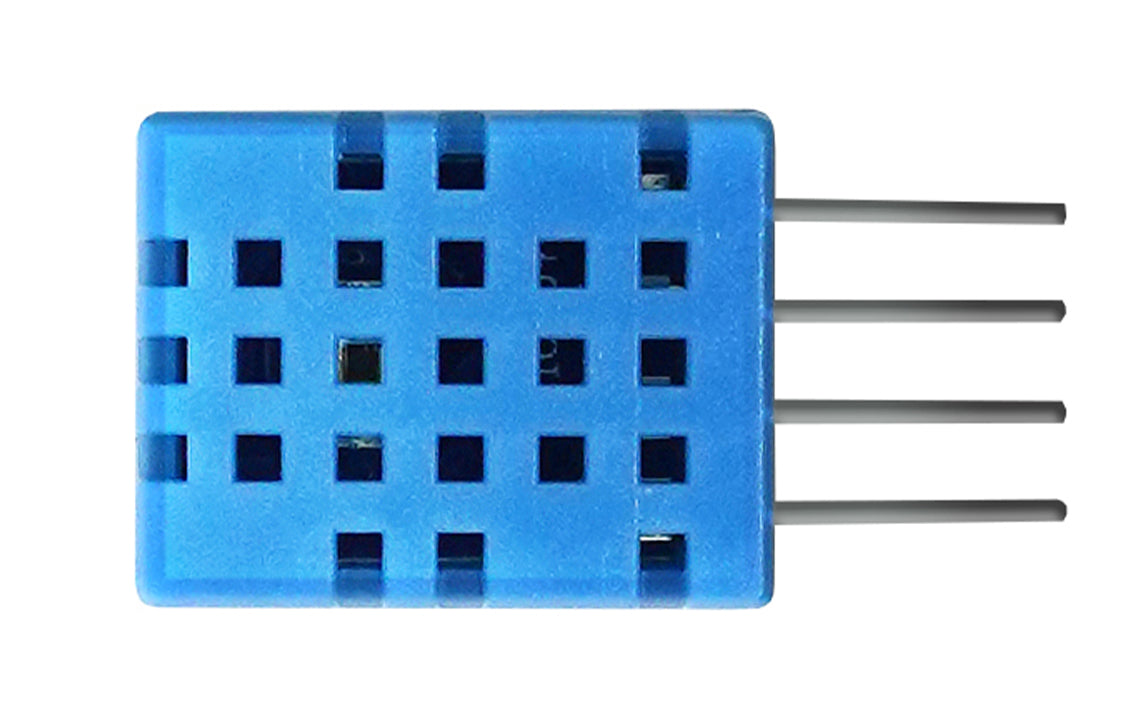
Every great DIY project starts with a spark of curiosity about the world around us. If you have ever wanted to build a device that reacts to its environment, a digital temperature and humidity sensor is the perfect place to begin. These compact components are a staple in the maker community, allowing your custom setups to measure both the warmth and the moisture in the surrounding air.

Overview & How It Works
At its core, a digital temperature and humidity sensor is an all-in-one environmental monitoring module. Inside its protective plastic housing, the component relies on two main internal elements to gather data: a humidity-sensing resistive component and a negative temperature coefficient (NTC) thermistor. The humidity element alters its electrical resistance based on the moisture levels in the air, while the thermistor changes resistance predictably as the temperature shifts.
Instead of forcing you to decipher complex analog voltage changes, the sensor features a small built-in microcontroller. This onboard chip reads the raw analog signals from the internal sensing elements, applies precise internal calibration factors, and converts the data into a clean, unified digital signal. This digital layout ensures excellent long-term stability, quick response times, and strong anti-interference capabilities, making it incredibly beginner-friendly for those just stepping into electronics.
Real-World Use in Arduino Projects
To make practical use of this environmental data, hobbyists frequently pair the sensor with an Arduino development board. Because the sensor outputs a pre-calibrated digital signal, it utilizes a streamlined single-bus communication protocol. This means the component requires only a single digital I/O pin on your microcontroller to transmit all its data, leaving the rest of your board open for other exciting additions.
Integrating this component into a DIY project opens up a massive variety of interactive applications. For example, you can create an automated climate control system where the sensor monitors an indoor space; if the humidity drops too low, the microprocessor can automatically switch on a dehumidifier or trigger a warning LED.
Alternatively, many makers incorporate this sensor into custom home weather stations that read environmental data and display live updates on an LCD screen. It is an excellent, hands-on way to practice soldering the pins to a prototyping board while diving into the fundamentals of open-source hardware.
See It in the Testudo Kit
Every component in this guide is part of the Testudo soldering practice kit — a hands-on way to learn electronics, soldering, and Arduino coding from the ground up.


