

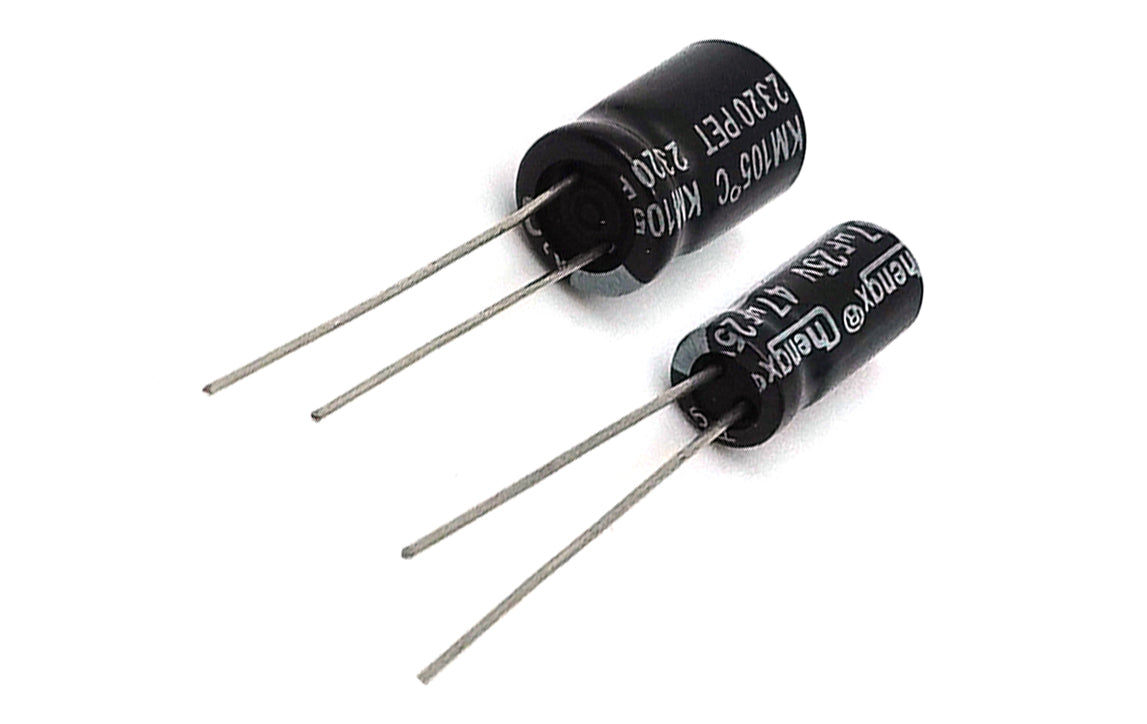
Section 1: Overview & How It Works
Think of an aluminum electrolytic capacitor as a tiny, ultra-fast rechargeable battery for your circuit. While a standard battery is built to store a large amount of energy and release it slowly over hours, a capacitor is designed to charge and discharge its stored energy in fractions of a second. Its primary job in modern electronics is to smooth out fluctuations in electrical voltage, acting as a crucial shock absorber that keeps your sensitive electronic components safe from sudden power spikes.

Inside its metal cylinder, this component uses two thin layers of aluminum foil rolled tightly together. One layer is coated with an oxide insulation barrier, and the sheets are soaked in a liquid electrolyte chemical. Because of this specialized fluid chemistry, these capacitors can store significantly more energy than other varieties of the same physical size. However, this fluid also makes them polarized, meaning they have a dedicated positive and negative side. Inserting one backward can cause the liquid inside to heat up rapidly, triggering the built-in safety vent on top to release the pressure safely.
Section 2: Real-World Use in Arduino Projects
When you step into the world of microcontrollers and start building with an Arduino, clean electricity becomes vital. Digital microcontrollers are highly sensitive to "electrical noise"—minor ripples in power caused by things like spinning motors or clicking relays. This component is widely used in filtering configurations right where power enters your board, functioning as an essential safety layer for any creator practicing advanced soldering on custom circuit boards.
For a practical example, imagine you are assembling a DIY robotic arm kit that uses several servo motors. Every time the motors rapidly change direction, they pull a sudden, massive gulp of current from your power supply, which can drop the voltage so low that your microcontroller resets or freezes. By soldering a capacitor across the power lines, it acts as a local reservoir, instantly supplying that extra burst of energy to the motor so your software continues running without a hitch.
Whether you are building interactive holiday lighting displays or assembling a dedicated soldering practice kit to sharpen your electronics fabrication skills, mastering how to safely position and mount these heavy-duty storage components is a major milestone for every aspiring maker.
See It in the Testudo Kit
Every component in this guide is part of the Testudo soldering practice kit — a hands-on way to learn electronics, soldering, and Arduino coding from the ground up.


