

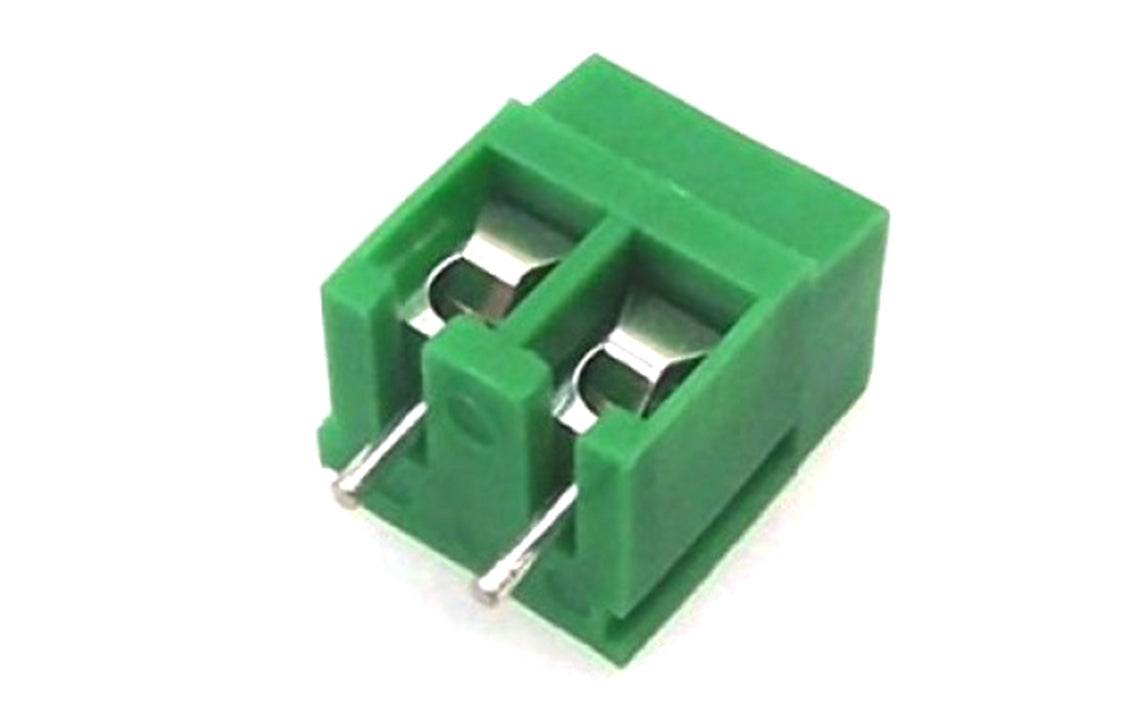
If you have ever built a desktop gadget, a smart home device, or an automated robot, you know that keeping your wiring secure can be a major challenge. Breadboards are fantastic for prototyping, but when it is time to move your creation into the real world, you need a connection that will not nudge loose. That is where the screw terminal block comes in.

Section 1: Overview & How It Works
A screw terminal block is a simple yet incredibly reliable connector used to join wires to a circuit board. Instead of permanently soldering a wire directly to your board, or relying on loose jumper wires, a terminal block gives you a robust, semi-permanent connection that you can alter at any time with a standard screwdriver.
Inside the plastic housing of the block sits a tiny metal cage and a screw. When you back the screw out, the cage opens up to accept a stripped piece of wire. As you turn the screw clockwise, it clamps the metal cage tightly down onto the conductor, ensuring excellent electrical contact. This modular design makes it a favorite in the maker community because it allows you to swap out sensors, power supplies, or broken wires in seconds without turning on a soldering iron.
Section 2: Real-World Use in Arduino Projects
In the world of electronics, screw terminal blocks act as the bridge between delicate control boards and high-power external components. While an Arduino microcontroller excels at processing data, it cannot directly handle the heavy current required by large motors or bright LED strips. Terminal blocks are frequently used on custom circuit boards or shields to safely feed external power into your system.
Imagine you are assembling a soldering practice kit that turns into an automated greenhouse. You will need to connect a water pump and an external battery pack to your main board. By soldering a few terminal blocks onto your custom shield, you can easily run heavy-gauge power wires straight to the pump. This setup keeps your DIY project clean, highly organized, and durable enough to handle continuous operation. Whether you are building an alarm system or a robotic arm, incorporating these blocks is a beginner-friendly way to step up your hardware game.
See It in the Testudo Kit
Every component in this guide is part of the Testudo soldering practice kit — a hands-on way to learn electronics, soldering, and Arduino coding from the ground up.


